What Construction Finance Leaders Ask Before Choosing an ERP
What construction finance leaders ask before choosing an ERP. Milestone IS covers the seven questions — job costing, implementation, and ROI.
8 min read
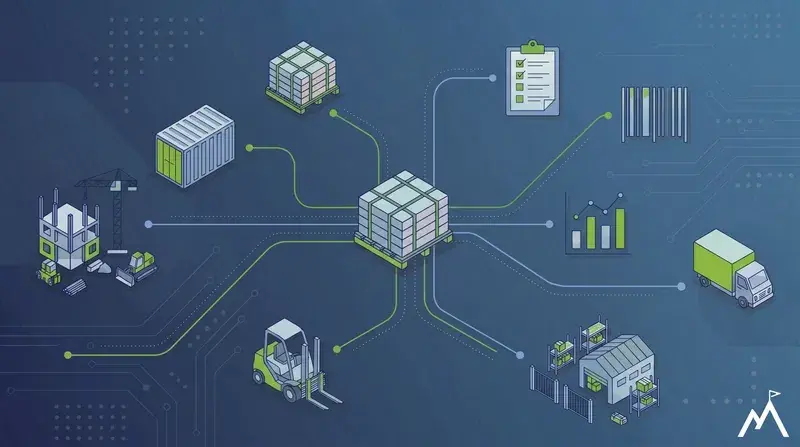
Material costs end up over budget, inventory numbers don't match what's on site, and finance is left trying to figure out where the differences came from. It is a challenge many contractors face as the business grows and inventory becomes harder to track across projects.
Most of the time, the problem is not that anyone is doing something wrong. The process that worked when the company was smaller simply starts breaking down as more jobs, more materials, and more people get involved. Materials move between jobs, inventory gets stored in multiple locations, and information ends up spread across texts, emails, spreadsheets, and sometimes even handwritten notes.
Over time, it becomes harder to answer basic questions. What materials were received? What job did they go to? Were they already charged to another project? By the time month-end arrives, finance is often spending more time tracking down answers than analyzing the numbers.
That is where better inventory controls and connected systems start making a real difference. When materials are tracked properly and connected to job costing, the numbers start to mean something again.
Most inventory challenges come back to three simple questions: What do we have? Where is it? What project does it belong to?
Those questions sound simple, but if you have ever tried reconciling material costs across a dozen active jobs, you already know how hard they are to answer without the right system in place.
Every project is its own temporary operation and inventory is constantly moving between suppliers, trucks, and job sites. A receiving process that worked on one job falls apart on the next. A superintendent borrows materials from another site and never documents it. A delivery comes in short and nobody updates the system. By the time finance tries to close the month, the real story of what happened to materials is already buried.
When inventory is managed well, job cost reports reflect what actually happened, teams can make better material and inventory decisions, and finance is not spending the last week of every month tracking down answers that should already be in the system.
Most inventory problems do not show up as one big failure. They are the same small issues repeating across every job until they become expensive and hard to explain.
Most contractors do not have a true inventory system. They have a spreadsheet in the office, notes on packing slips, and a superintendent who just knows what is on site.
Someone thinks material is already accounted for. Someone else thinks it went to another project. To avoid delays, more material gets ordered even though nobody is completely sure what is already on site.
Before long, the company has inventory it may not even need and job cost numbers that do not reflect any of it accurately. What started as an inventory problem eventually becomes a cost problem too.
Even companies with decent processes can run into problems when materials arrive on site. Deliveries show up throughout the day, crews are busy, and materials need to get unloaded so work can continue. If something arrives short, damaged, or different than what was ordered, it is easy for that information to never make it back into the system.
It does not take much for the numbers to get out of sync. Once that happens, inventory becomes harder to track, job cost starts drifting, and it becomes more difficult to understand what materials were actually used and where the costs belong.
Even a solid material estimate on bid day does not always survive a real project. RFIs, rework, and scope changes all affect how materials get used throughout the job. Materials get moved between projects, crews grab what they need to keep work moving, and not every change gets documented along the way.
One project suddenly looks over budget on materials while another looks fine, even though neither number is telling the full story. When inventory and job cost are disconnected from what is actually happening in the field, it becomes difficult to trust what any of the numbers are saying.
A crew runs short on material and needs it now. Someone sends a text to the office, and another order goes in because nobody is completely sure what is already on site. A few days later, the original material shows up. Now there are duplicate materials sitting in a trailer or storage container and a rush freight charge on the books that was never part of the original plan.
Multiply that across dozens of jobs and the cost adds up fast. Rush shipping, premium freight, and material purchased twice. It all shows up in job cost, but explaining exactly why it happened is another matter.
Materials get moved between crews and job sites without documentation. Tools get passed around. Something disappears and everyone assumes someone else knows where it went.
Eventually it gets written off, and if it happens often enough it starts to feel normal. The write-offs become just another cost of doing business, even though nobody is completely sure where the materials actually went.
When material costs are not tied back to the right jobs and cost codes, job cost reports become difficult to trust and profitability becomes harder to understand. Finance ends up spending time tracking down answers that should already be available, and even then the full story is not always clear.
By the time the work is done, the inventory issues, duplicate purchases, missing materials, and undocumented transfers have already worked their way into the numbers.
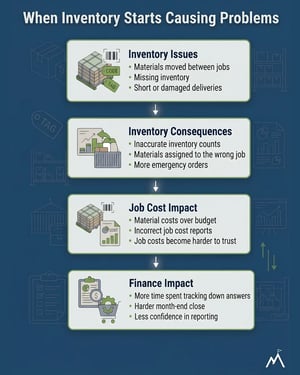
Most inventory problems are not caused by a lack of effort. They happen because inventory information and job cost become disconnected as materials move across jobs and locations. When those pieces start working together, the numbers become easier to trust and problems become easier to spot.
When inventory activity lives in one system, everyone is working from the same information. They can see what is on hand, what is on order, what is allocated to a project, and what has already been issued to a job. Finance is not spending time tracking down answers because the information is already in the system.
Accurate job cost starts with accurate inventory records. Deliveries need to be checked against what was ordered, and short shipments, damaged materials, and substitutions need to be documented before they disappear into the job. It sounds simple, but it is one of the easiest places for inventory numbers to get out of sync. When materials are recorded accurately from the start, the numbers that follow are much easier to trust.
When materials are issued to a job, the costs should be reflected right away. That gives finance visibility while work is still happening instead of weeks later when the job is already complete. Problems can be identified sooner while there is still time to do something about them.
When inventory records are accurate, ordering decisions become easier. Teams can see what is available, what is already committed to other jobs, and what needs to be ordered ahead of time. Fewer emergency orders, fewer duplicate purchases, and fewer freight charges that are difficult to explain later.
When inventory and job costing are connected, finance and operations are finally looking at the same numbers. Finance can see which jobs are running over on materials while the project is still active. Operations can see how material usage is affecting budgets and job performance in real time.
Both teams can ask better questions earlier, identify issues before they become bigger problems, and make decisions based on the same information instead of trying to piece the story together after the fact.
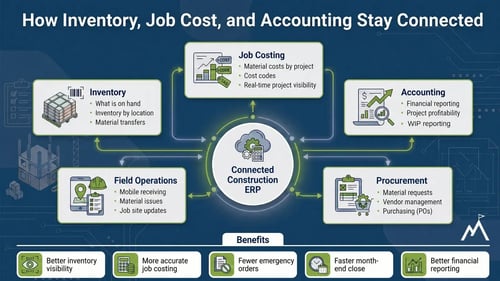
This is usually where contractors start looking at more connected systems.
When inventory, job cost, accounting, and project information all live in separate places, it becomes difficult to understand what is actually happening on a project. A construction ERP brings those pieces together so everyone is working from the same information instead of relying on spreadsheets, emails, and disconnected tools.
Acumatica Construction Edition is one example of what that looks like in practice. As materials move through the business, inventory, job cost, and accounting stay connected. Information only needs to be entered once, and updates are reflected throughout the system.
Field teams can receive deliveries against purchase orders, transfer materials between locations, and issue items to jobs and cost codes from a mobile device. Those transactions update job cost immediately, giving finance visibility while the project is still active instead of discovering surprises after the fact.
Inventory problems rarely stay inventory problems. Over time, they affect job cost, profitability, and financial reporting.
That is why more contractors are looking for ways to connect inventory, job cost, and accounting in one system. When those pieces work together, the numbers become easier to trust and decisions become easier to make.
If you’re looking to get better control of inventory and want to see how a more connected system can help, we are happy to help.
What is construction inventory management software? Construction inventory management software helps contractors track materials, equipment, tools, and supplies across job sites, service vehicles, and storage areas. The best systems connect inventory directly to purchasing, projects, and job costing so material costs are always tied to the right job and finance has numbers it can trust.
Why do construction companies struggle with inventory? Construction inventory is harder than most industries because every project is a temporary operation. Materials move constantly between jobs, deliveries change, and information often ends up spread across spreadsheets, emails, text messages, and disconnected systems. As companies grow, it becomes more difficult to know what materials are available, where they are located, and what project they belong to.
How do contractors track materials across job sites? The best approach combines one connected system, mobile tools for field teams, and clear processes for receiving, transferring, and issuing materials to jobs and cost codes. Without all three, materials fall through the cracks and job cost ends up reflecting something other than what actually happened.
What causes material waste in construction? Over-ordering, receiving mistakes, poor documentation, damaged materials, and inventory moving between jobs without being recorded are some of the most common causes. Even small tracking issues can add up over time, leading to higher material costs and job cost reports that become harder to trust.
Can inventory be connected to job costing? Yes, and it is one of the most important things a construction company can do for financial visibility. When inventory and job costing work in the same system, every material receipt, transfer, and issue updates project costs in real time. Finance stops discovering problems at month-end and starts seeing them while there is still time to act.
Does Acumatica track construction inventory? Yes. Acumatica Construction Edition manages inventory across service trucks, job sites, and storage areas while keeping inventory, job cost, accounting, and project information connected . Field teams can receive materials, transfer inventory, and issue items to cost codes directly from a mobile device, and those transactions update job cost immediately.
Why is inventory important for job costing? Inventory costs often represent a significant portion of a project's budget. If materials are not received, transferred, and issued accurately, job cost reports can quickly become disconnected from what actually happened in the field. Accurate inventory tracking helps ensure material costs are assigned to the correct jobs and cost codes, giving finance a clearer picture of project profitability.

What construction finance leaders ask before choosing an ERP. Milestone IS covers the seven questions — job costing, implementation, and ROI.

Master project management in the construction with Acumatica ERP, integrating budgeting, reporting, and collaboration to ensure project success.

See how Acumatica inventory management connects stock, purchasing, warehouses, costing, and financials in one cloud ERP for better visibility and...