PROJECT ACCOUNTING · ACUMATICA CLOUD ERP
Project Accounting Software
Financial Visibility From Project Budget to Profitability
Track project budgets, costs, billing, revenue recognition, and profitability in the same ERP as your accounting.
Acumatica connects project accounting with purchasing, time and expenses, inventory, billing, and financial reporting so finance and project teams can see where projects stand while work is still in progress.
Acumatica is the platform. Milestone makes it work for your business.
The Project Accounting Challenge
When Standard Accounting Is Not Enough
Standard accounting tells you how the company is performing. Project-based businesses also need to understand the financial performance of each project.
Project accounting connects job costs with budgets, billing, revenue, forecasting, and profitability, then brings that activity into company-wide reporting.
Financial Visibility
Know Where Each Project Stands Before Month-End
Acumatica gives finance and project teams a current view of project performance without rebuilding reports in spreadsheets.
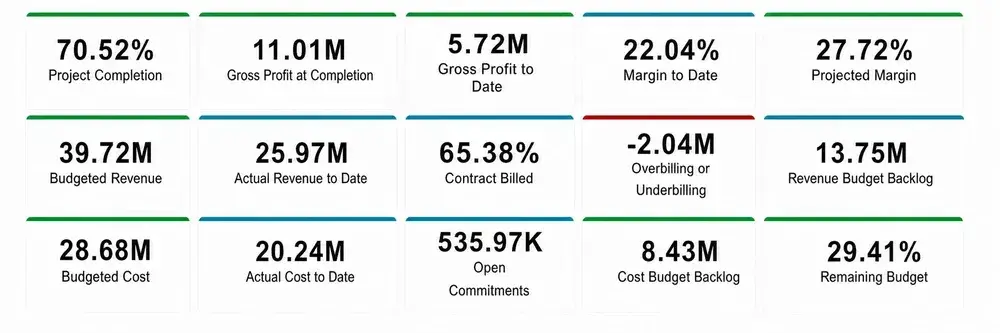
Acumatica Project Accounting
Project Accounting From Budget Through Financial Reporting
Acumatica gives project-based businesses one project accounting system for costs, billing, revenue, and reporting.
Plan the project, then track costs and commitments against it.
Build project budgets for labor, materials, equipment, expenses, and other costs, then compare performance against the plan.
Capture employee time and expenses against the correct project for costing, billing, and profitability reporting.
Connect purchase orders, materials, and inventory activity directly to project costs.
See committed costs alongside actual costs and budgets before invoices arrive.
Connect the work being performed to the way you bill and recognize revenue.
Support project-based billing requirements including time and materials, fixed-fee, milestone, and other billing structures.
Manage revenue recognition within the same project accounting system used to track project financials.
Track approved project changes and reflect their financial impact in budgets, costs, and billing.
Connect billable time and expenses to customer invoices.
Turn project activity into financial information finance can use.
See revenue, costs, and margins by project without waiting for separate reports to be assembled.
Analyze financial performance by project, customer, department, or other reporting dimensions.
Give finance, project teams, and leadership current visibility into the measures that matter to them.
Bring project activity into the general ledger and broader financial reporting.
Project Costing & Billing
Follow the Financial Life of a Project
A project changes financially from its initial budget through final billing. Acumatica connects those stages, with time, expenses, purchasing, and inventory activity feeding project costs and project results carrying through to the general ledger and company reporting. Performance monitoring, billing, and financial reporting continue throughout the project.
Project-Based Businesses
For Businesses Where the Project Drives the Financials
Project-based accounting software fits wherever budgets, costs, billing, and profitability need to be tracked at the project level.
Explore Construction ERP →
Explore Manufacturing ERP →
Explore ERP for ISPs →
Why Acumatica
Why Acumatica for Project Accounting
Acumatica Project Accounting is part of a complete cloud ERP, so project and financial information stay together as the business grows.
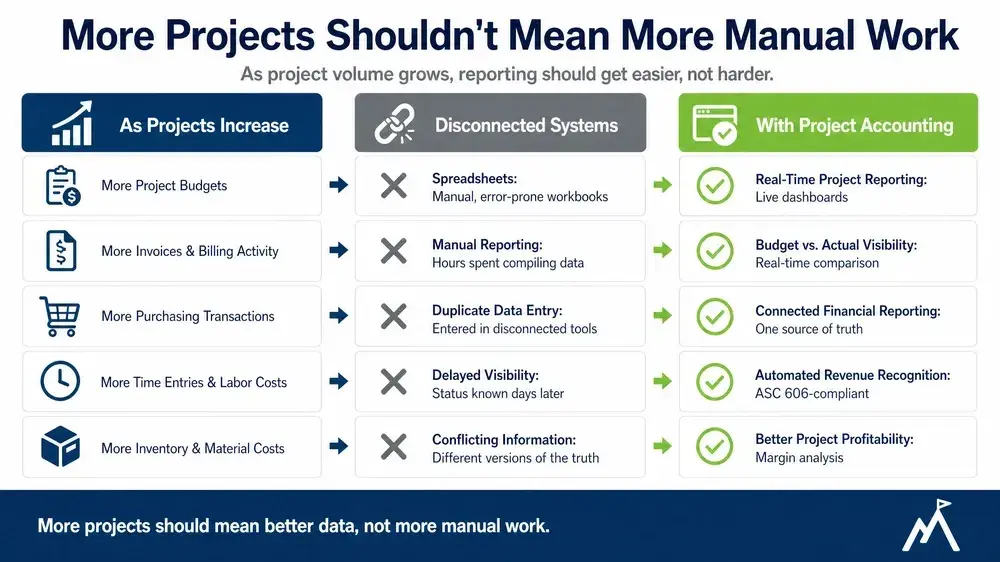
Why Milestone
Accurate Project Financials Start With the Right Project Setup
How projects, tasks, and cost codes are set up in Acumatica shapes how costs are tracked, how customers are billed, how revenue is recognized, and how clearly project profitability shows up in your reports. Milestone Information Solutions configures Acumatica around the way your business runs and bills its projects.
FAQ
Common Questions About Project Accounting Software
-
What is project accounting software?
Project accounting software tracks the financial performance of individual projects, including budgets, costs, billing, revenue, and profitability. Unlike traditional accounting, which focuses on the business as a whole, project accounting gives finance and project teams visibility into how each project is performing.
-
What is the difference between project accounting and job costing?
Job costing focuses primarily on the costs associated with a project or job. Project accounting expands that view to include budgets, committed costs, billing, revenue recognition, forecasting, profitability, and financial reporting.
-
Can Acumatica manage project costing and billing?
Yes. Acumatica can connect project budgets, costs, time and expenses, purchasing, inventory, billing, and financial reporting in one ERP platform. The specific configuration depends on how your business structures projects and bills customers.
-
Does Acumatica support project revenue recognition?
Acumatica can support project billing and revenue recognition based on contract terms, billing rules, and accounting requirements. The appropriate configuration depends on how the business delivers work, bills customers, and recognizes revenue.
-
What types of businesses use project accounting software?
Project accounting software is commonly used by professional services firms, construction companies, engineering and architecture firms, project-based manufacturers, IT and technology services companies, telecommunications and infrastructure businesses, and other organizations where financial performance needs to be tracked by project.
Reach Your Next Milestone
See What Acumatica Project Accounting Could Look Like for Your Business
Tell us how you manage project budgets, costs, billing, and reporting today. Milestone can help you determine whether Acumatica fits the way your business operates.