Construction Inventory Management Software: Control Materials & Costs
See how construction inventory management software helps contractors track materials, improve job costing, and give finance numbers they can trust.
4 min read
For most construction finance teams, ERP becomes a priority when the numbers stop lining up. WIP is off, job costs lag behind reality, and reporting depends on spreadsheets that someone has to maintain manually.
At that point, the decision is less about features and more about control, visibility, and risk. The real question is whether a new system will actually fix those issues.
These are the questions finance leaders ask most often when they start evaluating ERP.
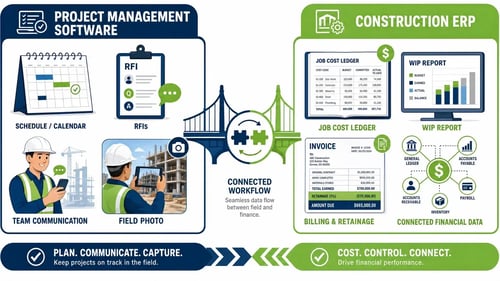
Most contractors already use project management tools like Procore, Buildertrend, or others. These systems do a great job managing schedules, RFIs, daily logs, and field communication.
The gap shows up in the financials.
Project management tools are not built to handle job costs at an accounting level, track committed costs, manage billing and retainage, or give finance a real-time view across all projects. That is where ERP fits in.
One of the biggest blind spots is committed costs. Purchase orders have been issued, but the invoices have not hit yet. Those obligations are real, but they often do not show up in financial reports until later, which creates a false sense of margin and distorts job profitability.
With Acumatica Construction Edition, committed costs are tracked at the purchase order level, so finance teams always have a clear view of where each job actually stands.
Everything connects from there. Job costing, accounting, payroll, purchasing, and subcontracts all tie back to the same system, instead of being spread across multiple tools.
ERP does not always mean replacing the tools your team already relies on. Those systems can stay in place and connect to Acumatica while your financial data becomes consistent and reliable.
Every contractor does things a certain way. Cost codes, billing methods, and approval processes are built over years, and they work. The real question is whether a new system can support those realities without creating new risk.
That means handling progress billing, T&M, fixed fee, and AIA billing. It also means retainage, subcontract management, and making sure committed costs flow cleanly into financial reporting.
For finance teams managing percentage-of-completion revenue recognition, the system also needs to recognize revenue as work progresses, not just when invoices go out. Acumatica handles this natively, which reduces the manual adjustments and reliance on spreadsheets that tend to slow down month-end close.
The goal is not to change how you work for the sake of new software. Acumatica is configurable, so workflows, job structures, and reporting can align to how your business already operates while improving consistency and visibility.
Active jobs do not stop because you bought new software. That is why timeline is one of the first things finance teams want to understand.
For most small to midsize construction companies, a realistic range is four to six months. More complex environments with multiple entities, deeper integrations, or added customization can take longer. In most cases, the timeline is driven more by internal factors than by the software itself.
From a finance perspective, the biggest drivers are:
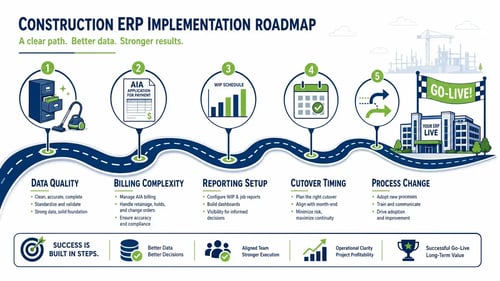
Data quality — If job costs, cost codes, or WIP reporting are inconsistent today, those issues need to be addressed before or during implementation.
Billing and revenue recognition complexity — Progress billing, AIA, retainage, and multi-entity structures all require proper setup and testing before go-live.
Reporting expectations — Many companies use implementation to improve WIP schedules, job cost reporting, and financial visibility across the business.
Go-live timing — Most finance teams prefer to go live at month-end or year-end so financial periods stay clean.
Level of process change — Replacing the system as-is is faster. Improving workflows and eliminating manual steps takes more planning but delivers better long-term results.
Implementation is not just turning software on. It is about aligning financial and operational data so the business runs more effectively after go-live.
Finance teams are not looking to just replace what they have. They want to understand where margin is being lost and how to stop it.
In construction, the usual culprits are delayed billing, missed change orders, inaccurate job costing, and committed costs that do not show up until it is too late to act. By the time those issues surface in financial reports, the damage is usually already done.
With Acumatica, job costs, labor, purchasing, and commitments are visible in real time across all projects. Finance and project teams can identify issues early and make adjustments before they impact the bottom line.
WIP reporting also becomes more accurate because it is tied to live job data instead of spreadsheets. Underbilling and overbilling are easier to catch, and revenue recognition stays aligned with actual progress.
It also impacts more than internal reporting. Sureties rely on WIP reports to assess bonding capacity, and inaccurate WIP can limit your ability to take on larger work.
The result is not just better reporting. It is better control over profitability while the work is still in progress.
A system that only works in the office creates gaps. A system that gives the field too much freedom without structure creates risk. Finance teams are looking for a balance.
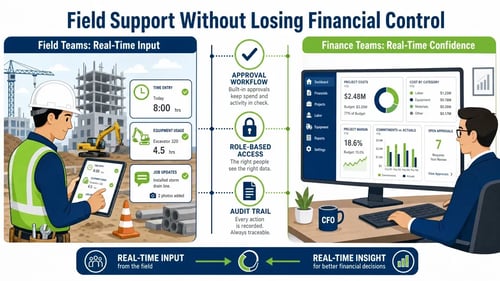
With Acumatica, field teams can enter time, equipment usage, and job updates directly into the system, tied to jobs and cost codes. For teams using other project management tools, that data can flow into Acumatica so the financial side stays current without duplicate entry.
At the same time, everything flows through defined approval workflows. Role-based access controls what field users can see and edit, and every transaction is tracked with a full audit trail.
Finance teams get accurate numbers they can trust without slowing the field down to get them.
Most ERP implementations that fall short do so because of people and process, not technology. When teams work around the system instead of through it, the data loses integrity and the expected gains never materialize.
From a finance perspective, this is a control issue.
Acumatica helps address this with role-based access, approval workflows, and audit trails that enforce consistent process across the organization. Transactions are tracked, changes are visible, and reporting is based on reliable data.
At Milestone Information Solutions, implementation is built around how your team actually works. Project managers, accounting, and leadership are involved early so the system reflects real workflows, not assumptions. When people have a hand in building it, they are more likely to use it and to use it consistently.
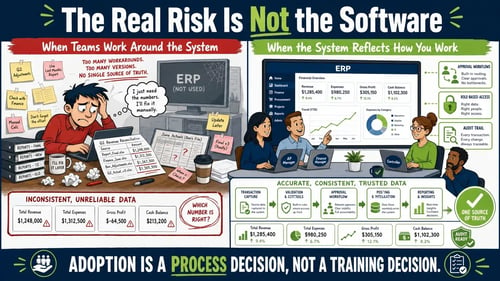
Most construction companies are not looking to replace everything. The real concern is whether the data stays consistent across systems.
Integrations are only useful if finance can trust the numbers coming out of them. When project management tools, payroll systems, and other platforms are all feeding data into different places, it becomes easy for those numbers to drift.
Acumatica acts as the financial system of record. Even when other systems are connected, there is one place where job costs, billing, and financial reporting are aligned.
For finance teams, that means one reliable set of numbers across the business. No more reconciling between systems or trying to determine which version is correct.
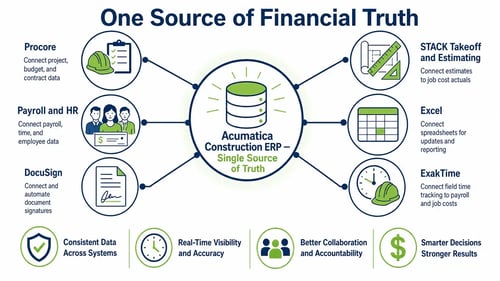
ERP is not just a technology decision for finance teams. It is a decision about visibility, control, and risk.
The right system gives leadership a clear view of job costs, billing, and financial performance in real time. It reduces reliance on spreadsheets, improves accuracy, and helps catch issues before they impact profitability.
If you are at that point, it is usually worth taking a closer look at your current setup and where the gaps are. From there, it becomes a straightforward conversation about whether a system like Acumatica makes sense for your construction business.
Contact Milestone Information Solutions
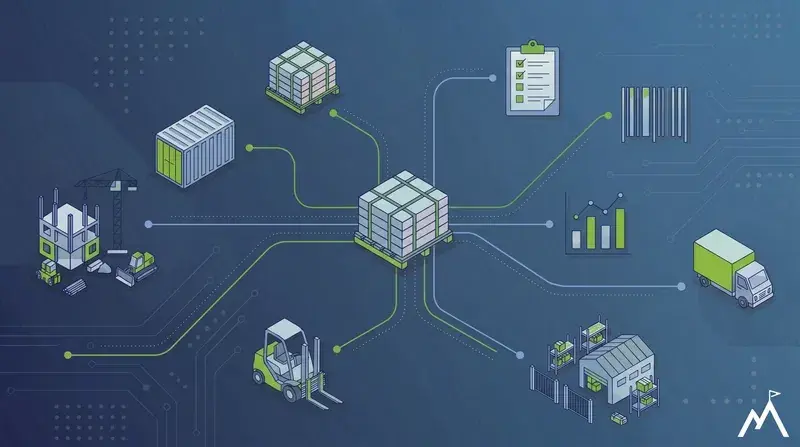
See how construction inventory management software helps contractors track materials, improve job costing, and give finance numbers they can trust.
Compare Sage 100 vs Acumatica across cloud access, reporting, integrations, licensing, scalability, and day-to-day use to see which ERP fits your...

Explore the Acumatica Construction Edition's Summary Tab for comprehensive project tracking, ensuring seamless integration and efficient management.