Manufacturing Inventory Management Software: Beyond Spreadsheets
A practical look at what manufacturing inventory software should actually do, and how to know when your current system is holding the business back.
5 min read
If you've been feeling the pain long enough to start researching solutions, you're probably past the "do we have a problem" stage. You know you do. The question now is which system will actually fix it.
That's where it gets harder. Every vendor leads with their strengths and buries their limitations. Demos look polished. And it's hard to know what questions to ask until something goes wrong after go-live.
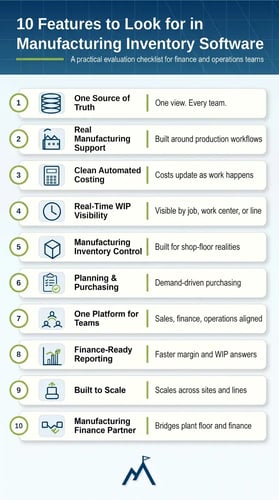
This list is meant to help with that. Ten things worth looking for when you're evaluating manufacturing inventory software, written from a finance and operations perspective rather than a vendor one.
If you're still in the "do we have a problem" stage, this is a good place to start.
Some of these will matter more than others depending on how your plant operates, but if a system struggles in several of these areas during a demo, pay attention.
If sales, production, and finance are all looking at different numbers, the software isn't solving the core problem.
Your next system should show one consistent picture of raw materials, WIP, and finished goods across all locations. When someone in sales, someone on the floor, and someone in finance all pull up the same item, they should see the same number. If that's not how the demo works, keep asking until you understand why.
In Acumatica, planners, production, and finance all work from the same real-time inventory view instead of trading spreadsheets or waiting for someone to reconcile the numbers.
As operations grow across plants, warehouses, and storage areas, inventory visibility gets harder to maintain without the right system. Most manufacturers in that situation end up with someone manually pulling reports from different locations and trying to piece together a picture of what's actually available.
Your next system should show what's on hand, what's allocated, and what's on order across every location without requiring a separate process to pull it together.
This is where platforms like Acumatica tend to help. Instead of pulling reports from different plants or warehouses, planners can see what's available, allocated, and on order in one place.
You're evaluating software to get better numbers, not more work.
The system should handle your costing method and roll material, labor, and overhead into WIP and finished goods automatically as work happens. In demos, push on how job or production order costs are actually captured, how variances show up and who sees them, and what month-end looks like for finance inside the system. If the explanation leans heavily on manual journal entries or offline spreadsheets, that's usually a sign the system isn't doing as much of the work as it should.
In Acumatica, costing flows directly from production into the GL so finance gets accurate job and product margins without the manual work at month-end.
If you can't see WIP, you can't manage it.
Your next system should let you see what's in progress by job, work center, or production line at any moment. Production should use this daily. Finance should be able to see the value tied up on the floor without chasing people for updates.
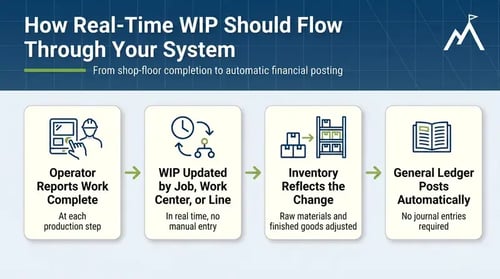
In a demo, ask to see a live WIP view, how operators report work as complete at each step, and how that data flows into inventory and the general ledger. Don't let vendors skip this. WIP is where a lot of systems look good in theory and fall apart in practice. You're looking for normal system behavior, not a carefully staged walkthrough.
This is an area where Acumatica really stands out. WIP updates automatically as work moves through production orders and work centers, so finance and production are always looking at the same numbers.
For manufacturers in regulated or recall-sensitive industries, traceability isn't a nice-to-have. It's a requirement. But even outside those environments, lot and serial tracking gives finance and operations a much cleaner picture of what's in the building, where it came from, and where it went.
Make sure the system captures lot and serial numbers at receipt, production, and shipment, and that you can trace forward and backward without digging through paper records or separate databases.
In Acumatica, lot and serial tracking ties together purchase receipts, production, and shipments so quality checks and recalls don't depend on digging through old spreadsheets and paper travelers.
Your inventory position should drive purchasing, not the other way around.
Good manufacturing inventory software ties planning, purchasing, and on-hand inventory together so you're buying based on real demand.
That means material requirements planning that uses BOMs, routings, and forecasts, suggested purchase orders based on actual shortages and safety stock, and visibility into late supplier deliveries and their impact on open jobs.
This is where you reduce expediting and free up cash that's currently tied up in the wrong inventory.
In Acumatica, MRP uses live BOMs, routings, and current inventory positions to drive suggested purchase orders so purchasing can react to real demand instead of gut feel.
You're not just buying tools for the shop floor. You're buying a shared system for the whole business.
Sales orders and inventory should live in the same platform. Available-to-promise information should be something everyone trusts. And when a big new order comes in, someone should be able to see the impact on capacity, inventory, and cash without pulling three reports from three different systems. If sales and production are still working from different numbers, finance will always be stuck in the middle cleaning it up.
When everything runs on one platform like Acumatica, sales orders, inventory, production, and financials stay connected so there's no reconciliation required between what sales committed and what production can actually deliver.
Manual data entry on the shop floor is one of the most common sources of inventory inaccuracy. Workers key in quantities at the end of a shift, transactions get missed, and by the time finance looks at the numbers they're already behind.
Barcode scanning and mobile data collection fix this by capturing transactions as they happen. Receiving, picks, production completions, and inventory movements all update the system in real time without someone having to remember what happened three hours ago.
In Acumatica, barcode scanning and mobile data collection feed inventory and WIP in real time so transactions are captured as work happens instead of being keyed in at the end of the shift.
The right system should make reporting faster and more useful, not just prettier.
You should be able to answer real questions without exporting everything to Excel. Which products or customers are tying up the most working capital? Which jobs or product lines consistently miss their margin targets? How are inventory turns and slow-moving stock trending? What's the value of WIP by work center at month-end? Ask vendors to show you these views in a demo even with sample data. If they can't, assume you'll be building them yourself.
Because inventory, WIP, and costing all roll into the same data model in Acumatica, finance can build margin and inventory reports directly on live ERP data instead of rebuilding everything in Excel.
Choosing the right software matters. But so does working with someone who understands how manufacturing businesses actually operate.
For manufacturers, that usually means finding a partner who can translate between production and finance, not just configure screens. Someone who knows how inventory, BOM, and costing structures need to be designed so both teams can trust the numbers and how to phase the project in a way that keeps the plant running without creating a new set of problems.
The goal is a system your people actually use and your finance team actually believes. With Acumatica as the platform and a partner like Milestone Information Solutions helping to design your item structures, costing, and workflows, you get a system that can handle today's complexity and still support the next stage of growth.
What questions should finance ask during a manufacturing software demo? Ask to see how inventory ties into the general ledger, how WIP is valued and updated as work moves through production, how job or production order costs are calculated, and what month-end close actually looks like inside the system. Also ask how variances are tracked and who sees them. The answers will tell you quickly whether the system was designed with finance in mind or just bolted finance on as an afterthought.
If you're already evaluating options, this list should help you ask better questions and avoid surprises later in the process.
That doesn't automatically mean replacing software tomorrow. But it usually means there is value in understanding what matters most for your operation, where the bottlenecks are coming from, and what a cleaner manufacturing process could actually look like.
If it would be helpful to talk through where things stand today, we are always happy to have a practical conversation about what is working, what is causing friction, and whether a more connected manufacturing platform makes sense for where the business is headed.
A practical look at what manufacturing inventory software should actually do, and how to know when your current system is holding the business back.
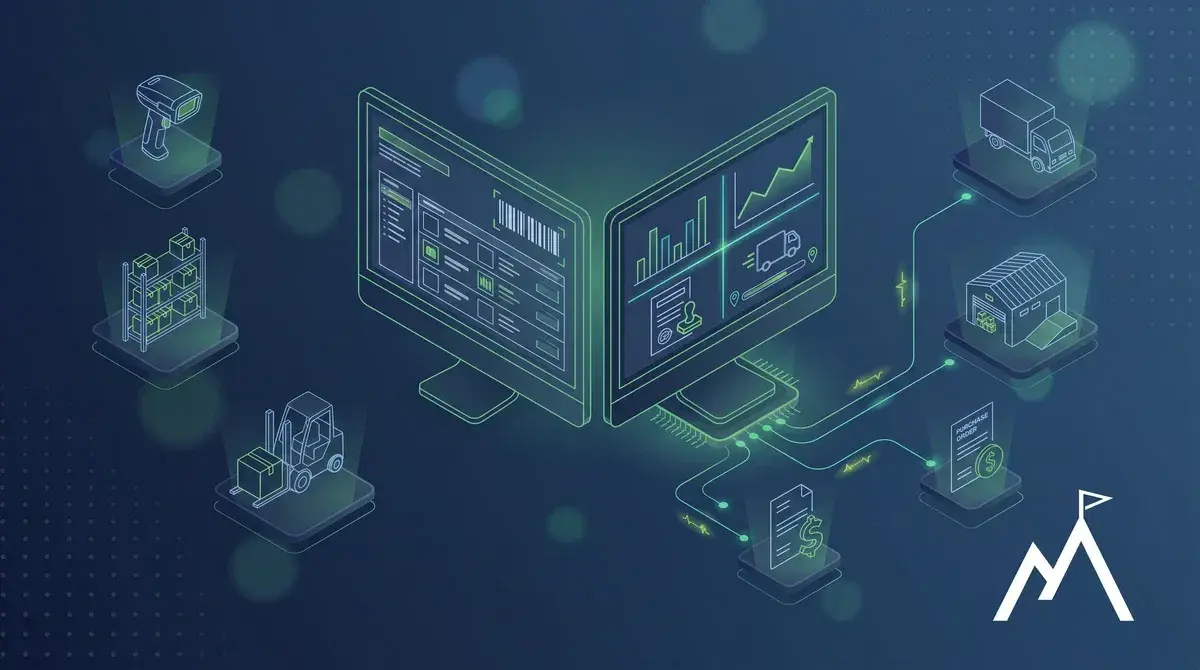
Compare ERP and WMS, see how standalone and integrated systems differ, and learn when an ERP WMS may be the better fit for your warehouse.
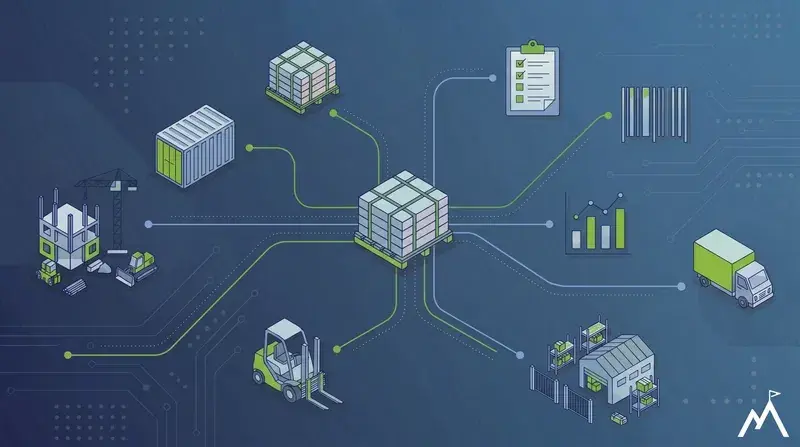
See how construction inventory management software helps contractors track materials, improve job costing, and give finance numbers they can trust.